.jpg.d7c4811371ebabebbd932752fad368e4.jpg)
Joe Marconi
-
Posts
5,025 -
Joined
-
Last visited
-
Days Won
471
Content Type
Forums
AutoShopOwner Articles
Downloads
Blogs
Gallery
Profiles
Events
Store
Links Directory
Community Map
Everything posted by Joe Marconi
-
 We all have those customers that focus on price alone. And we all struggle with our persistent attempts at converting them into believers. Believers of the concept that, while we cannot totally dismiss price, it’s the value of the product or service the customer needs to consider when making a purchase. What’s funny about these customers is that each visit tends to start with a complaint about price, even before the car is looked at. We recently had a situation that started off on the wrong foot, with price being the issue; but ended up a win for us, and for the customer. Charlie Challenge (not his real name) arrived at our shop and asked for an estimate on replacing the timing chain for his Nissan Altima. My service advisor responded with, “Mr. Challenge, that’s a big job. How do you know your car needs a timing chain?” Charlie replied back, “Another shop checked it out and they told me it does. Can you please give me a price?” My advisor continued with, “Well, before we do anything, we need to perform a few tests to make sure you really do need a timing chain.” Charlie emphatically replied back, “And how much is that going to cost? All you guys want is my money! I asked for one thing; a price on a timing chain and you just want to make more money on something I already know I need!” It took a lot of composure, but my advisor calmly stated all the reasons why testing is the best way to go, emphasizing the fact that if we replace the chain and it’s not the problem, the money spent would be wasted. Charlie shook his head, threw the keys on the counter and authorized the testing. I’ve known Charlie for a long time. He’s not a bad guy. But price is always the topic of discussion. He has told me in the past that I should take a look at what other shops charge, and be more competitive with my prices. I have told Charlie that I don’t, and never will, price my services by what other shops are charging. I have also told him to look beyond price and look at the value you get. Besides, all the quality shops that I know are pretty much the same when it comes to pricing. During the write-up process, Charlie revealed to my service advisor that the check engine light had been on, and that’s why he took his car to the other shop. The other shop replaced a valve timing solenoid, but that didn’t fix the problem. He was then told that the next step was to replace the chain. Later that morning, the car was dispatched to a technician. A multipoint inspection was performed, along with all the tests related to the check engine light; which was a timing error. After the MPI and the tests were completed, we found a few things wrong with Charlie’s car. His Altima needed an oil change service, a battery, rear brakes, an air filter, the cabin filter had a mouse nest in it and the car needed an intake timing control sensor, not a timing chain. This engine has two intake control solenoids. One was supposedly replaced by the other shop. So, did this car have two bad sensors? Or was the wrong sensor replaced by mistake? When my service advisor called Charlie to tell him the good news, he was silent for a moment. He was shocked that the car didn’t need a timing chain. He authorized the solenoid replacement, the oil change and replacing the mouse-infested cabin filter. He declined the other work. I purposely did the follow-up call with Charlie a few days later. He was happy to hear from me and told me that car hadn’t run this good in years. I had to needle him a bit, “So Charlie, are we really expensive? We saved you a ton of money by doing the tests first and not just replacing the chain.” He said, “Ok Joe, I get it, I really do this time.” During our conversation, Charlie did confess that he didn’t go to another shop, but actually went to that all-knowing, all-powerful place on the internet known as Google. It was Charlie that replaced the solenoid, not realizing there were two, and not knowing how to properly test the system either. When I asked Charlie why he didn’t let us replace the battery, air filter and the rear brakes, he replied, “Joe, come on, I can do that work myself, and besides, you guys are expensive.” Sometimes you win the battle, but it’s hard to win the war with some customers. This story was originally published by Joe Marconi in Ratchet+Wrench on October 1st, 2019
 -
We all have those customers that focus on price alone. And we all struggle with our persistent attempts at converting them into believers. Believers of the concept that, while we cannot totally dismiss price, it’s the value of the product or service the customer needs to consider when making a purchase. What’s funny about these customers is that each visit tends to start with a complaint about price, even before the car is looked at. We recently had a situation that started off on the wrong foot, with price being the issue; but ended up a win for us, and for the customer. Charlie Challenge (not his real name) arrived at our shop and asked for an estimate on replacing the timing chain for his Nissan Altima. My service advisor responded with, “Mr. Challenge, that’s a big job. How do you know your car needs a timing chain?” Charlie replied back, “Another shop checked it out and they told me it does. Can you please give me a price?” My advisor continued with, “Well, before we do anything, we need to perform a few tests to make sure you really do need a timing chain.” Charlie emphatically replied back, “And how much is that going to cost? All you guys want is my money! I asked for one thing; a price on a timing chain and you just want to make more money on something I already know I need!” It took a lot of composure, but my advisor calmly stated all the reasons why testing is the best way to go, emphasizing the fact that if we replace the chain and it’s not the problem, the money spent would be wasted. Charlie shook his head, threw the keys on the counter and authorized the testing. I’ve known Charlie for a long time. He’s not a bad guy. But price is always the topic of discussion. He has told me in the past that I should take a look at what other shops charge, and be more competitive with my prices. I have told Charlie that I don’t, and never will, price my services by what other shops are charging. I have also told him to look beyond price and look at the value you get. Besides, all the quality shops that I know are pretty much the same when it comes to pricing. During the write-up process, Charlie revealed to my service advisor that the check engine light had been on, and that’s why he took his car to the other shop. The other shop replaced a valve timing solenoid, but that didn’t fix the problem. He was then told that the next step was to replace the chain. Later that morning, the car was dispatched to a technician. A multipoint inspection was performed, along with all the tests related to the check engine light; which was a timing error. After the MPI and the tests were completed, we found a few things wrong with Charlie’s car. His Altima needed an oil change service, a battery, rear brakes, an air filter, the cabin filter had a mouse nest in it and the car needed an intake timing control sensor, not a timing chain. This engine has two intake control solenoids. One was supposedly replaced by the other shop. So, did this car have two bad sensors? Or was the wrong sensor replaced by mistake? When my service advisor called Charlie to tell him the good news, he was silent for a moment. He was shocked that the car didn’t need a timing chain. He authorized the solenoid replacement, the oil change and replacing the mouse-infested cabin filter. He declined the other work. I purposely did the follow-up call with Charlie a few days later. He was happy to hear from me and told me that car hadn’t run this good in years. I had to needle him a bit, “So Charlie, are we really expensive? We saved you a ton of money by doing the tests first and not just replacing the chain.” He said, “Ok Joe, I get it, I really do this time.” During our conversation, Charlie did confess that he didn’t go to another shop, but actually went to that all-knowing, all-powerful place on the internet known as Google. It was Charlie that replaced the solenoid, not realizing there were two, and not knowing how to properly test the system either. When I asked Charlie why he didn’t let us replace the battery, air filter and the rear brakes, he replied, “Joe, come on, I can do that work myself, and besides, you guys are expensive.” Sometimes you win the battle, but it’s hard to win the war with some customers. This story was originally published by Joe Marconi in Ratchet+Wrench on October 1st, 2019 View full article
-
 There’s an old Japanese proverb that says, “The footsteps of the farmer are his best fertilizer.” In translation, this means that the closer you are to your crops and animals, the easier it is to observe and respond to their needs. Business owners, just as farmers, have a sixth sense about what’s happening within their company. And, for the most part, business owners are the driving force behind the success of their companies. And it’s not always because of any particular training. Many times, the mere fact that the buck stops with you gives you the mental fortitude to push forward and find solutions to daily problems. Your gut evolves into a very valuable management and survival tool. The majority of business owners created their business with a dream and the passion to make a difference in their lives and in the automotive industry. They clearly understand the sacrifices that are needed to get a new business off the ground, and also the years of dedication it takes to reach a point where the business becomes financially stable. But, running a business takes its toll on even the toughest person, and time away from business becomes equally important. So, the question becomes, can you build your business to the point where your presence still remains when you’re away? Before I go on, I want you to consider something—and that’s your future. I know that many of you have a young company and plan on working for decades to come. But life goes by quickly and it can also throw you a curveball. Please take my advice with this; if you’re a business owner and you are not planning for your future, you are making a big mistake. I know too many shop owners that were forced to walk away from their businesses after decades of work with nothing more than memories. Their dreams turned into nightmares due to lack of planning. Sit down and write out what your future looks like. You will probably need help with this, but you need to think about a continuity plan and an exit strategy. OK, I got that out of the way; now back to the article. Here’s the bottom line. Taking time off and having your business run smoothly without you there should be one of your key goals. But the truth is, many shop owners can’t let go. They find it hard to take any time off, let alone leaving their baby in the hands of a manager or another key person. They even feel guilty when they’re away. And there are others who realize that in order to have a fulfilling life, the only way to continue the business is to step aside and stay away. I don’t know what type of person you are. But what I do know with certainty after nearly 40 years in business is that, for the sake of your health and for the well-being of your family, you need to create a business that allows you the freedom to take time off. And that starts with hiring and keeping the right people; people that share your culture and work ethic. Free time away from the business also requires that you understand your numbers, can generate a consistent profit and establish strategies to continually grow the business. Achieving your goal of taking more time off is more dependent on what you create than the actual work you do. Create a culture where people come to work because they want to. Create a management style that allows you to reach out to your employees and help them achieve the things they want out of life. Create a work environment where the people you employ feel they are part of a unified vision where everyone will enjoy the fruits of their labor. Lastly, create strong relationships with all your employees from the very first day they are hired. Building this culture will help to ensure that your employees will perform the same each day, whether you are there or not. I know for many it will be hard to let go. After all, your business is your baby, right? You founded it; you worked hard for years and dedicated your life to it. But, every baby grows up and becomes an adult. And adults should become self-sufficient. If you build the right team with the right culture, you will gain the confidence that the people you employ can do an amazing job in your absence. This story was originally published by Joe Marconi in Ratchet+Wrench on September 5th, 2019
 -
There’s an old Japanese proverb that says, “The footsteps of the farmer are his best fertilizer.” In translation, this means that the closer you are to your crops and animals, the easier it is to observe and respond to their needs. Business owners, just as farmers, have a sixth sense about what’s happening within their company. And, for the most part, business owners are the driving force behind the success of their companies. And it’s not always because of any particular training. Many times, the mere fact that the buck stops with you gives you the mental fortitude to push forward and find solutions to daily problems. Your gut evolves into a very valuable management and survival tool. The majority of business owners created their business with a dream and the passion to make a difference in their lives and in the automotive industry. They clearly understand the sacrifices that are needed to get a new business off the ground, and also the years of dedication it takes to reach a point where the business becomes financially stable. But, running a business takes its toll on even the toughest person, and time away from business becomes equally important. So, the question becomes, can you build your business to the point where your presence still remains when you’re away? Before I go on, I want you to consider something—and that’s your future. I know that many of you have a young company and plan on working for decades to come. But life goes by quickly and it can also throw you a curveball. Please take my advice with this; if you’re a business owner and you are not planning for your future, you are making a big mistake. I know too many shop owners that were forced to walk away from their businesses after decades of work with nothing more than memories. Their dreams turned into nightmares due to lack of planning. Sit down and write out what your future looks like. You will probably need help with this, but you need to think about a continuity plan and an exit strategy. OK, I got that out of the way; now back to the article. Here’s the bottom line. Taking time off and having your business run smoothly without you there should be one of your key goals. But the truth is, many shop owners can’t let go. They find it hard to take any time off, let alone leaving their baby in the hands of a manager or another key person. They even feel guilty when they’re away. And there are others who realize that in order to have a fulfilling life, the only way to continue the business is to step aside and stay away. I don’t know what type of person you are. But what I do know with certainty after nearly 40 years in business is that, for the sake of your health and for the well-being of your family, you need to create a business that allows you the freedom to take time off. And that starts with hiring and keeping the right people; people that share your culture and work ethic. Free time away from the business also requires that you understand your numbers, can generate a consistent profit and establish strategies to continually grow the business. Achieving your goal of taking more time off is more dependent on what you create than the actual work you do. Create a culture where people come to work because they want to. Create a management style that allows you to reach out to your employees and help them achieve the things they want out of life. Create a work environment where the people you employ feel they are part of a unified vision where everyone will enjoy the fruits of their labor. Lastly, create strong relationships with all your employees from the very first day they are hired. Building this culture will help to ensure that your employees will perform the same each day, whether you are there or not. I know for many it will be hard to let go. After all, your business is your baby, right? You founded it; you worked hard for years and dedicated your life to it. But, every baby grows up and becomes an adult. And adults should become self-sufficient. If you build the right team with the right culture, you will gain the confidence that the people you employ can do an amazing job in your absence. This story was originally published by Joe Marconi in Ratchet+Wrench on September 5th, 2019 View full article
-
My son was an accomplished wrestler in high school, competing in the New York State Championships. He continued competing during his college years. At a major tournament, in which my son was ranked No. 1, the coached worried about his first match. In tournaments, the No. 1 ranked wrestler competes against the bottom-ranked wrestler in the first round. When I asked the coach why he worried about the bottom-ranked opponent, the coach replied, “Tough competition keeps you sharp. Weaker competition makes you complacent.” In business, as in sports, complacency occurs when you fail to recognize the strengths of your competition—even if the competition is considered weaker than you. Complacency is caused by many reasons. It could be the result of being successful, which gives you a false sense of security that the good days will continue forever. Or, it could be that the business owner is so entrenched in the day-to-day operations that he fails to recognize the world around him. Complacency also lowers your drive and your focus. It spreads to your employees. Eventually, this will have a detrimental effect on your business. However, loss of business due to complacency doesn’t happen overnight. It’s a slow, painful death. One day you realize that your car counts are down, your customer base is dwindling and your new customer acquisition is declining too. Today, consumers have choice and competition is fierce. Every segment of the auto repair industry wants a piece of the service and repair pie. You need to take a long hard look at your competition, analyze it and study it. Then build a strategy around what you bring to the marketplace that will set you apart from the rest. One thing to keep in mind: In the business world, competition is everywhere. And it’s not just other repair shops, dealerships or the tire store down the road. Your business is being judged and compared to by every experience the consumer encounters. In other words, if your customer had an amazing experience at a local restaurant, your business will be judged against that experience, too. But the question is: How should you compete? In his book The Purple Cow, author Seth Godin makes the point that your business needs to be so remarkable, people will stop in their tracks to learn more about you. To make the cow comparison: Cows are essentially boring. They really don’t stand out. But, if you’re driving down a road and see a purple cow in a field, you’ll more than likely stop your car to take a closer look. Now ask yourself: Is your business boring? Does it have the look and feel as every other repair shop in town? What can you do to make your business so remarkable, so different, that people will stop in their tracks and take notice? This is a powerful marketing strategy. No matter how successful your business may be, it’s wise to look at all prominent businesses in your area. Find out who they are, how they market themselves and what makes them stand out. Then, create a strategy that differentiates your business from the rest. By the way, never compete with another business by copying what it does or by the benefits it offers. Copying the competition is what many businesses do, and it’s a mistake. Studying the competition is more about learning what they do, and then finding out what makes you different. What can your business bring to the marketplace that will make people take notice? Think about the company Harley Davidson. When you drive a Harley Davidson, you drive a Harley. It’s not a motorcycle—it’s a Harley. Harley Davidson is a brand so strong, people will actually tattoo the Harley logo on their bodies. Consider Starbucks. People don’t say, “I’m going to get a cup of coffee.” They say, “I’m going to get a Starbucks.” These two companies have a unique brand identity. They stand out among the rest. Competition is a good thing. It makes you stronger. It makes the entire business world better. It forces you to think about yourself and your brand. And by improving your brand, the customer benefits also improve, which, in turn, makes your business more successful. Never fear competition; rather, you should embrace it. Learn from it. But, remember, look for ways to set you apart from other businesses. One last thing: Don’t focus on what you do. We all essentially do the same thing—oil services, brake work, suspension, tires and more. Think about why you are in business. It’s your culture. Think about what makes you special and communicate that to your customers and potential customers. Make that special something your purple cow. By the way, my son took first place in that tournament. Although every match was a challenge, the two toughest matches were the final round and (you guessed it) his first match against a weaker opponent. This story was originally published by Joe Marconi in Ratchet+Wrench on July 31st, 2019 View full article
-
 My son was an accomplished wrestler in high school, competing in the New York State Championships. He continued competing during his college years. At a major tournament, in which my son was ranked No. 1, the coached worried about his first match. In tournaments, the No. 1 ranked wrestler competes against the bottom-ranked wrestler in the first round. When I asked the coach why he worried about the bottom-ranked opponent, the coach replied, “Tough competition keeps you sharp. Weaker competition makes you complacent.” In business, as in sports, complacency occurs when you fail to recognize the strengths of your competition—even if the competition is considered weaker than you. Complacency is caused by many reasons. It could be the result of being successful, which gives you a false sense of security that the good days will continue forever. Or, it could be that the business owner is so entrenched in the day-to-day operations that he fails to recognize the world around him. Complacency also lowers your drive and your focus. It spreads to your employees. Eventually, this will have a detrimental effect on your business. However, loss of business due to complacency doesn’t happen overnight. It’s a slow, painful death. One day you realize that your car counts are down, your customer base is dwindling and your new customer acquisition is declining too. Today, consumers have choice and competition is fierce. Every segment of the auto repair industry wants a piece of the service and repair pie. You need to take a long hard look at your competition, analyze it and study it. Then build a strategy around what you bring to the marketplace that will set you apart from the rest. One thing to keep in mind: In the business world, competition is everywhere. And it’s not just other repair shops, dealerships or the tire store down the road. Your business is being judged and compared to by every experience the consumer encounters. In other words, if your customer had an amazing experience at a local restaurant, your business will be judged against that experience, too. But the question is: How should you compete? In his book The Purple Cow, author Seth Godin makes the point that your business needs to be so remarkable, people will stop in their tracks to learn more about you. To make the cow comparison: Cows are essentially boring. They really don’t stand out. But, if you’re driving down a road and see a purple cow in a field, you’ll more than likely stop your car to take a closer look. Now ask yourself: Is your business boring? Does it have the look and feel as every other repair shop in town? What can you do to make your business so remarkable, so different, that people will stop in their tracks and take notice? This is a powerful marketing strategy. No matter how successful your business may be, it’s wise to look at all prominent businesses in your area. Find out who they are, how they market themselves and what makes them stand out. Then, create a strategy that differentiates your business from the rest. By the way, never compete with another business by copying what it does or by the benefits it offers. Copying the competition is what many businesses do, and it’s a mistake. Studying the competition is more about learning what they do, and then finding out what makes you different. What can your business bring to the marketplace that will make people take notice? Think about the company Harley Davidson. When you drive a Harley Davidson, you drive a Harley. It’s not a motorcycle—it’s a Harley. Harley Davidson is a brand so strong, people will actually tattoo the Harley logo on their bodies. Consider Starbucks. People don’t say, “I’m going to get a cup of coffee.” They say, “I’m going to get a Starbucks.” These two companies have a unique brand identity. They stand out among the rest. Competition is a good thing. It makes you stronger. It makes the entire business world better. It forces you to think about yourself and your brand. And by improving your brand, the customer benefits also improve, which, in turn, makes your business more successful. Never fear competition; rather, you should embrace it. Learn from it. But, remember, look for ways to set you apart from other businesses. One last thing: Don’t focus on what you do. We all essentially do the same thing—oil services, brake work, suspension, tires and more. Think about why you are in business. It’s your culture. Think about what makes you special and communicate that to your customers and potential customers. Make that special something your purple cow. By the way, my son took first place in that tournament. Although every match was a challenge, the two toughest matches were the final round and (you guessed it) his first match against a weaker opponent. This story was originally published by Joe Marconi in Ratchet+Wrench on July 31st, 2019
 -
There’s a lot of talk these days about the effect Amazon is having on businesses. Even Google has taken a hit. More and more people simply go straight to Amazon, instead of using Google’s search engine when looking for an item or product. Once-dominant brick and mortar stores are now ramping up to compete with Amazon’s online ordering service. Just look what Amazon did to the book industry. There is no doubt that Amazon has changed the way the typical consumer buys and searches for just about anything. But, can Amazon ever really become a major competitor with us; the independent repair shop? My conclusion is no. Let me tell you why. It was the Saturday before Christmas, roughly 12 years ago. A man walked in my shop, visibly upset and holding an old Lionel train transformer. I asked him if I could help him, and he replied, “I was wondering if you could check out this transformer. This transformer has been in my family for over 50 years. Each year the family gets together to decorate the Christmas tree and set up the Lionel Trains. It’s a tradition we started a long time ago.” I stood before him a little confused, not really knowing what to say. Finally I replied, “Sir, I repair cars, not toy train transformers.” Getting more upset, he said, “Toy train transformer? This is a rare, vintage Lionel Duel Transformer, Type ZW!” I replied back, “OK; no promises. Let me take a look” I set the transformer on the back bench and plugged the cord it into an outlet. The man frantically said, “See, there’s no light; it’s not working!” I turned the transformer over, and took the screws out to disassemble it. The man watched me as if I were a surgeon operating on his child. I poked around a bit and inspected the cord leading inside. I could clearly see a break in the wire. I cut the wire, stripped it back, attached the wire back to the terminals and reassembled the transformer. I plugged it in and the power light came on. “It working! It’s working!” the man said. He thanked me over and over and asked me what he owed me, and I told him, “It’s Christmas; just become my customer.” And he did. Another time, a young woman in her early twenties and her father came to me with an unusual problem. I could see that the daughter was crying and the father was trying to console her. The daughter told me that she was recently engaged. As she was driving this morning, her friend reached over and tried to take off the ring. As she pulled her hand back, the ring came off and flew across the top of the dashboard and disappeared. The father said, “Joe, could it have gone down the defroster vents?” I said, “It’s possible, but if you didn’t see where it went, it’s going to be a big job to find it.” The girl began to cry again and said, “Please, can you get the ring back?” I looked at her and said, “Sure, it will take time. It’s almost the end of the day. Let me clear up a few things and I’ll get to it.” About an hour later, I brought the car in and begin taking apart the dash. The father and daughter stood there watching me as I carefully took apart the dash, piece by piece. After 40 minutes I had just about every piece of the dashboard apart, and no ring. I climbed out from under the dash to take a break and asked the daughter, “Are you sure the ring landed on top of the dash and disappeared?” She replied, “Yes, I’m sure. It has to be there. It must!” I went back to work, removing more parts of the dash. I finally got down to the lower center of the dash where the ducts split off and go to the floor vents. As I removed the left side floor vent, I heard a rattling sound. I carefully picked it up, turned it over and out came the ring! The daughter burst into tears and laughter and gave me a big hug. The father told me, “Joe, I will never forget this—never.” These two stories are true. And I’ll bet a year’s pay that you have similar stories. Each day, we put our hearts and souls into helping people. We create a customer experience that sets us apart from most other businesses. We go above and beyond what’s expected of us, and we succeed. Let me ask you; could the “Amazon effect” ever compete with you? The only effect you should focus on is the effect you have on your customers and your community. This will always be your competitive advantage. Use it wisely. This story was originally published by Joe Marconi in Ratchet+Wrench on July 1st, 2019 View full article
-
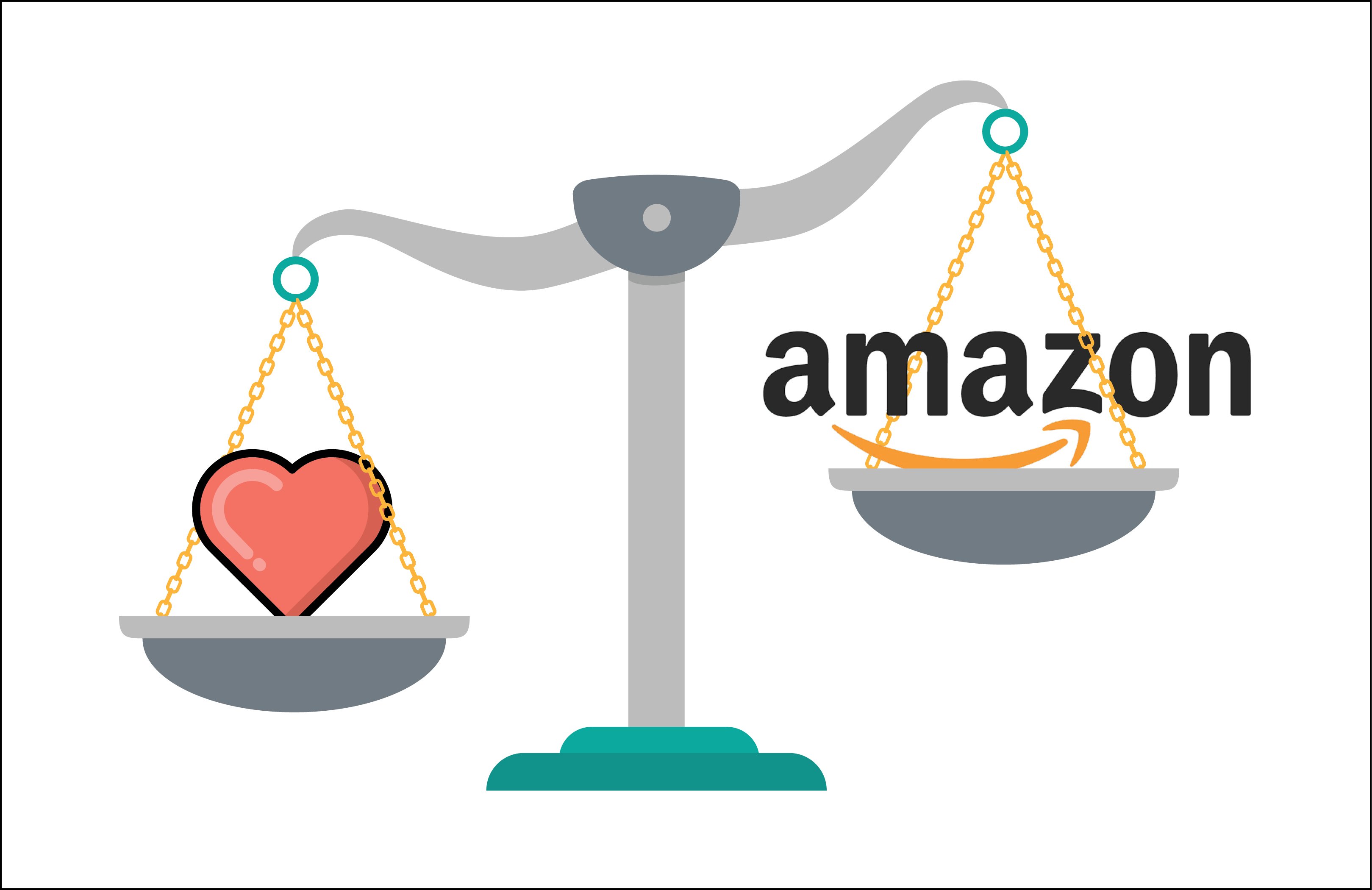 There’s a lot of talk these days about the effect Amazon is having on businesses. Even Google has taken a hit. More and more people simply go straight to Amazon, instead of using Google’s search engine when looking for an item or product. Once-dominant brick and mortar stores are now ramping up to compete with Amazon’s online ordering service. Just look what Amazon did to the book industry. There is no doubt that Amazon has changed the way the typical consumer buys and searches for just about anything. But, can Amazon ever really become a major competitor with us; the independent repair shop? My conclusion is no. Let me tell you why. It was the Saturday before Christmas, roughly 12 years ago. A man walked in my shop, visibly upset and holding an old Lionel train transformer. I asked him if I could help him, and he replied, “I was wondering if you could check out this transformer. This transformer has been in my family for over 50 years. Each year the family gets together to decorate the Christmas tree and set up the Lionel Trains. It’s a tradition we started a long time ago.” I stood before him a little confused, not really knowing what to say. Finally I replied, “Sir, I repair cars, not toy train transformers.” Getting more upset, he said, “Toy train transformer? This is a rare, vintage Lionel Duel Transformer, Type ZW!” I replied back, “OK; no promises. Let me take a look” I set the transformer on the back bench and plugged the cord it into an outlet. The man frantically said, “See, there’s no light; it’s not working!” I turned the transformer over, and took the screws out to disassemble it. The man watched me as if I were a surgeon operating on his child. I poked around a bit and inspected the cord leading inside. I could clearly see a break in the wire. I cut the wire, stripped it back, attached the wire back to the terminals and reassembled the transformer. I plugged it in and the power light came on. “It working! It’s working!” the man said. He thanked me over and over and asked me what he owed me, and I told him, “It’s Christmas; just become my customer.” And he did. Another time, a young woman in her early twenties and her father came to me with an unusual problem. I could see that the daughter was crying and the father was trying to console her. The daughter told me that she was recently engaged. As she was driving this morning, her friend reached over and tried to take off the ring. As she pulled her hand back, the ring came off and flew across the top of the dashboard and disappeared. The father said, “Joe, could it have gone down the defroster vents?” I said, “It’s possible, but if you didn’t see where it went, it’s going to be a big job to find it.” The girl began to cry again and said, “Please, can you get the ring back?” I looked at her and said, “Sure, it will take time. It’s almost the end of the day. Let me clear up a few things and I’ll get to it.” About an hour later, I brought the car in and begin taking apart the dash. The father and daughter stood there watching me as I carefully took apart the dash, piece by piece. After 40 minutes I had just about every piece of the dashboard apart, and no ring. I climbed out from under the dash to take a break and asked the daughter, “Are you sure the ring landed on top of the dash and disappeared?” She replied, “Yes, I’m sure. It has to be there. It must!” I went back to work, removing more parts of the dash. I finally got down to the lower center of the dash where the ducts split off and go to the floor vents. As I removed the left side floor vent, I heard a rattling sound. I carefully picked it up, turned it over and out came the ring! The daughter burst into tears and laughter and gave me a big hug. The father told me, “Joe, I will never forget this—never.” These two stories are true. And I’ll bet a year’s pay that you have similar stories. Each day, we put our hearts and souls into helping people. We create a customer experience that sets us apart from most other businesses. We go above and beyond what’s expected of us, and we succeed. Let me ask you; could the “Amazon effect” ever compete with you? The only effect you should focus on is the effect you have on your customers and your community. This will always be your competitive advantage. Use it wisely. This story was originally published by Joe Marconi in Ratchet+Wrench on July 1st, 2019
 -
.thumb.jpg.2b345efc275b9df0af2bbb306a10a78a.jpg)
Plan now for the future and boost sales
Joe Marconi replied to Joe Marconi's topic in Joe’s Business Tips For Shop Owners
It may be an old article, but still extremely important. We all have an obligation to perform our services and repairs to the highest quality, and not get complacent. We all realize what could happen when short cuts are taken or a service/repair not done properly. -
Do you have any details on his shop - Please message me privately, Thank you.
-
Well said! In my opinion, you hit the nail on the head! Great comments!
-
The other day, a local fellow shop owner, was complaining to me that his plumber just charged him $225 labor for a house call. My response was, "And why do you have an issue with that?" I know this plumber; he is very successful, in high demand in the area, does great work and provides a VALUBALE service. Does this sound familiar? You bet....sounds like you and your business!!! When the day comes that all of us truly know what we are worth and charge for it, that will be the day when all us raise the level of the auto industry, begin to attract more people to us, pay our employees better, build for our future and go home with the pay we deserve. I know this is going to cause controversy....so let's start the conversation.
- 1 reply
-
- 4
-

-
- labor rate
- effective labor rate
- (and 2 more)
-
If you have a repair shop business in New York State that you are looking to sell, please let me know. I will keep this strictly confidential. Criteria required, shops with 6 plus bays. Other details to be explained. Please email me: [email protected]
-
As we celebrate July 4th with family, friends and barbecues, let us remember and reflect on the meaning of this day; Independence Day. The day that represents the Declaration of Independence and the birth of the United States of America as an independent nation.
-
According to Zip Recruiter, tech pay on average is about $41,000 per year. Is this an issue? I know many of you pay more than average, but do you think that we need to increase tech pay in order to attract more people to the auto repair industry. One other thing to consider, the shop and shop owner needs to be profitable and make the money first in order to pay anyone a decent wage. Your thoughts?
-
Below is a link to an article about Obenbay's debut with an online virtual service advisor. Is this the future? Or will technology remove that personal touch. For me, someone that has built a business on strong relationships and human customer touch points, this is something I am not sure of. But then again, what about the millennials and the Z generation? https://www.openbay.com/blog/openbay-launches-industry-first-artificial-intelligence-powered-automotive-service-advisor/
-
After 39 years in business, it's time to get serious about my exit plan. While I don't think I will ever truly retire, I do think it's time to plan the next chapter in my life. I would like to hear from shop owners out there in the same situation. What are your plans? Are you selling your repair shop? Do you have a succession plan? And are you thinking about a different line of work to keep you busy?
-
You spend a lot of time and money finding an hiring an employee. Whether it be a technician, service advisor or office worker. However, the real work to ensure that the new employee is up and running begins when you hire that person. Don't make the mistake of thinking that a new-hire can be put to work without an orientation period. No matter how experienced someone may be, take the time to slowly acclimate that person to your shop, your other employees and your systems and procedures. The time you take in the beginning will help to create a long-lasting employee relationship.
-
 Roughly a month ago, two events happened on the same day that reminded me that there are things that are so precious, you cannot put a price on them. Those events also reminded me that some of the things we stress over, really aren’t as important as we think. And in the end, it all comes down to the importance of life itself. I got a call that day from Paul, the person who picks up our scrap metal. He asked if he could speak to me in private. Now, being a seasoned business owner, that’s usually not a good sign. But, this had nothing to do with business. I met Paul in my office a few hours later. He appeared very uncomfortable and upset. After exchanging a few words about business and the weather, he told me that his brother died last year. He was one of three other brothers that died within the past five years. He went on to tell me that none of his brothers had any savings or insurance, so it was up to him to take care of all the burial expenses for all the brothers. As Paul spoke, I could see that he was emotionally drained. Then he said to me, “Joe, I really hate to ask you this. I am tapped out. I cannot support all my financial obligations at this time. Would it be possible to lend me the money to purchase the gravestone for my brother? You can make the check out directly to the gravestone company, not to me.” I have known Paul a long time. He’s one of those hard-working, tough-talking guys that you would never imagine asking for a handout. I didn’t hesitate and wrote out the check and handed it to him. He held back the tears as he shook my hand and told me, “Joe, I will never forget this, and I will pay you back.” About an hour later, the owner of a local tow company walked into my office manager’s office to pick up a check we owed him for last month’s tows. I wasn’t paying much attention until I overheard my office manager say, “Oh, my God, I am sorry, Dave. I didn’t even know you were sick.” Dave is 42 years old, married with kids, and has brain cancer that is not responding to treatment. Dave has a great attitude, but understands the reality of his illness. He’s doing his best while on the treatment, but admitted that, some days, he finds it hard to function. He told us how he started his tow company right out of high school and has worked hard his entire life. As he was leaving, I told him to reach out to us if he needs anything. He told me prayer might help. I told him I would do that. Before the two events that day, I was dealing with a few business problems. And I need to be honest: I was not in the best of moods. After speaking to Paul and Dave, those issues that seemed so daunting before, didn’t seem all that important anymore. I sat back in my chair, looked over at a photo of my grandkids on my desk, and told myself that I need to do a better job at arranging life’s priorities. As shop owners, we get caught up in the day-to-day struggles of running a business—sometimes at a cost to our families, friends and ourselves. We anguish over bad online reviews, disgruntled employees, slow days and declining car counts. We sometimes find it hard to sleep at night, reflecting over and over again in our minds, the problems of the day. And we repeat this cycle over and over, year after year. Let me tell you, no business issue is ever all that serious that it cannot be overcome. But, when life throws you a curveball, as in the case with Paul and Dave, those problems are not so easily overcome. There are many reasons why each of us go into business. For many of us, it’s the passion for the work we do. For others, it’s the burning desire to improve the automotive industry. While I cannot say that we are in perfect alignment in every area of business, I do know one thing with certainty: We all need to stop and reflect from time to time on all the things that have nothing to do with business, but everything to do with life itself. Those are the things that no amount of money can ever buy. Those are the things that are priceless. This story was originally published by Joe Marconi in Ratchet+Wrench on June 1st, 2019
 -
Roughly a month ago, two events happened on the same day that reminded me that there are things that are so precious, you cannot put a price on them. Those events also reminded me that some of the things we stress over, really aren’t as important as we think. And in the end, it all comes down to the importance of life itself. I got a call that day from Paul, the person who picks up our scrap metal. He asked if he could speak to me in private. Now, being a seasoned business owner, that’s usually not a good sign. But, this had nothing to do with business. I met Paul in my office a few hours later. He appeared very uncomfortable and upset. After exchanging a few words about business and the weather, he told me that his brother died last year. He was one of three other brothers that died within the past five years. He went on to tell me that none of his brothers had any savings or insurance, so it was up to him to take care of all the burial expenses for all the brothers. As Paul spoke, I could see that he was emotionally drained. Then he said to me, “Joe, I really hate to ask you this. I am tapped out. I cannot support all my financial obligations at this time. Would it be possible to lend me the money to purchase the gravestone for my brother? You can make the check out directly to the gravestone company, not to me.” I have known Paul a long time. He’s one of those hard-working, tough-talking guys that you would never imagine asking for a handout. I didn’t hesitate and wrote out the check and handed it to him. He held back the tears as he shook my hand and told me, “Joe, I will never forget this, and I will pay you back.” About an hour later, the owner of a local tow company walked into my office manager’s office to pick up a check we owed him for last month’s tows. I wasn’t paying much attention until I overheard my office manager say, “Oh, my God, I am sorry, Dave. I didn’t even know you were sick.” Dave is 42 years old, married with kids, and has brain cancer that is not responding to treatment. Dave has a great attitude, but understands the reality of his illness. He’s doing his best while on the treatment, but admitted that, some days, he finds it hard to function. He told us how he started his tow company right out of high school and has worked hard his entire life. As he was leaving, I told him to reach out to us if he needs anything. He told me prayer might help. I told him I would do that. Before the two events that day, I was dealing with a few business problems. And I need to be honest: I was not in the best of moods. After speaking to Paul and Dave, those issues that seemed so daunting before, didn’t seem all that important anymore. I sat back in my chair, looked over at a photo of my grandkids on my desk, and told myself that I need to do a better job at arranging life’s priorities. As shop owners, we get caught up in the day-to-day struggles of running a business—sometimes at a cost to our families, friends and ourselves. We anguish over bad online reviews, disgruntled employees, slow days and declining car counts. We sometimes find it hard to sleep at night, reflecting over and over again in our minds, the problems of the day. And we repeat this cycle over and over, year after year. Let me tell you, no business issue is ever all that serious that it cannot be overcome. But, when life throws you a curveball, as in the case with Paul and Dave, those problems are not so easily overcome. There are many reasons why each of us go into business. For many of us, it’s the passion for the work we do. For others, it’s the burning desire to improve the automotive industry. While I cannot say that we are in perfect alignment in every area of business, I do know one thing with certainty: We all need to stop and reflect from time to time on all the things that have nothing to do with business, but everything to do with life itself. Those are the things that no amount of money can ever buy. Those are the things that are priceless. This story was originally published by Joe Marconi in Ratchet+Wrench on June 1st, 2019 View full article
-
Today we commemorate D-Day, June 6, 1944. Seventy Five years ago today, more than 160,000 Allied Troops, landed on the beaches of Normandy, France, to begin the operation that would liberate Western Europe from Nazi Germany’s control. Many brave lost their lives on this day. Perhaps one of the most important events of WWII.

-
Memorial Day is a time for barbecues and parties. However, it’s also the day in which we remember and honor those who have died while serving in the United States Armed Forces. Please take time this weekend to reflect and honor those that sacrificed their lives for this great country!
- 1 reply
-
- 1
-
-
Best Labor Claim Program
Joe Marconi replied to ADealerTech's topic in Auto Repair Shop Management Help? Start Here
Banner programs are good. And the strategy behind having a few main suppliers is not a bad idea. And don't forget, being part of a program does not limit you to buy from whom you choose to, just as long as you adhere to the program guidelines. -
Best Labor Claim Program
Joe Marconi replied to ADealerTech's topic in Auto Repair Shop Management Help? Start Here
After nearly 40 years in business, I can tell you that there is no real solution to this problem. I gave up on labor claims years ago. I would wait months to hear back from an engineer's report, only for the report to say that somehow my tech installed the caliper wrong and that's why if failed. I don't want to sound negative, but that is a reality. Joining a program group, like TECH NET, that pays labor is perhaps the best option. Also, document all comebacks: The brand, the store you bought it from. Look for trends. Then, sit down with your parts supplier and work out a deal. No one wants to get rich over a comeback, but the truth is comebacks kill. Lastly, make sure your gross profit on parts and labor is in line and factor in a percentage for warranty issues. No company is perfect and no tech is perfect. Hope this helps. -
Frank, thanks for the feedback on a very controversial topic. Many companies are a waste of time. And we have had denied claims too for reasons I am not sure. The teardown issue is another topic that is ridiculous. It's the company's way of pushing the expense and liability to the customer. That's why we make it policy to discuss everything upfront with the customer. Ethics and morals win out each time.